Ethereal Habitat Delhi: India’s Spine-Chilling Desi Horror Adventure
Table of Contents
India’s mobile gaming landscape has witnessed a remarkable shift over the past half-decade, with desi-themed content emerging as a dominant force across genres. From casual puzzle games rooted in Indian festivals to action-packed battle royales featuring regional heroes, developers are increasingly catering to the unique tastes and cultural sensibilities of Indian gamers. However, the horror genre remained a laggard—until the arrival of Ethereal Habitat Delhi. Developed by Daman Games, this groundbreaking title has redefined desi horror by blending Delhi’s rich historical heritage with spine-tingling supernatural elements, creating an experience that resonates deeply with Indian players while offering universal appeal.
Launched on March 20, 2024, Ethereal Habitat Delhi took the Indian gaming market by storm, crossing 35 million downloads within its first three months and securing a 4.8-star rating on both the Google Play Store and Apple App Store. What sets this game apart from generic horror titles? Unlike Western horror games that rely on gory visuals and formulaic jump scares, Ethereal Habitat Delhi draws from India’s diverse supernatural folklore—churails, bhoots, djinns, pretas, and more—weaving these entities into a narrative centered around Delhi’s most infamous haunted landmarks. Imagine navigating the shadowy corridors of the Red Fort at midnight, solving puzzles using desi items like lemons, chillies, and sindoor (known for warding off evil in Indian traditions), and communicating with spirits in your mother tongue—this is the immersive, culturally authentic experience that Ethereal Habitat Delhi delivers.
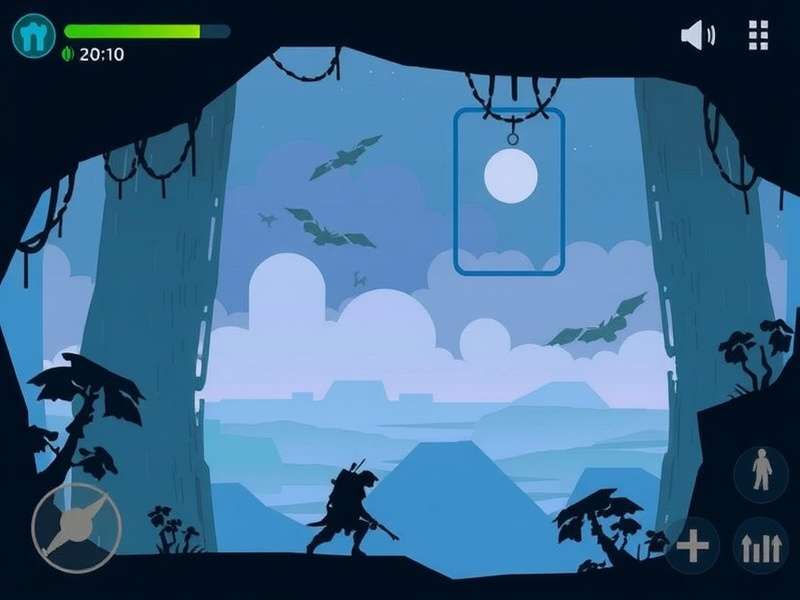
Figure 1: Gameplay from Ethereal Habitat Delhi showcasing the haunted Red Fort, with dynamic lighting and supernatural elements that capture the game’s eerie atmosphere.
Set in the heart of Delhi, the game follows the journey of Aarav, a 24-year-old archaeology student who returns to his hometown to investigate the mysterious disappearance of his grandfather—Ravi Sharma, a renowned historian and paranormal researcher who dedicated his life to studying Delhi’s haunted sites. As Aarav delves deeper into the city’s dark past, he uncovers a centuries-old curse that has trapped the spirits of those who died unjustly in Delhi’s iconic landmarks. From the bustling yet eerie lanes of Chandni Chowk to the abandoned halls of Purana Qila, every location in Ethereal Habitat Delhi is steeped in real history and local folklore, making the horror feel personal and relatable to Indian gamers.
A core strength of Ethereal Habitat Delhi is its unwavering commitment to cultural authenticity. The development team at Daman Games spent over 18 months researching Delhi’s haunted history, interviewing local storytellers, paranormal investigators, and historians to ensure that every supernatural element, puzzle, and character feels true to Indian culture. For instance, one quest requires players to use a combination of sindoor, turmeric, and a coconut to break a churail’s curse—a nod to the age-old Indian belief that these items possess protective properties. Another mission tasks players with reciting a shloka from the Vedas to calm an angry spirit, highlighting the game’s respect for India’s spiritual traditions.
Key Differentiators for Indian Horror Enthusiasts: 13 regional language options (including Hindi, Tamil, Telugu, Bengali, Kannada, Malayalam, Marathi, Gujarati, Punjabi, Odia, Assamese, Urdu, and English) with authentic voice acting by local artists, puzzles rooted in desi supernatural beliefs, recreation of real-life haunted locations in Delhi, festival-themed horror events (Diwali Ghost Hunts, Holi Horror Specials), optimized gameplay for mid-range smartphones (the most popular device category in India), and a multiplayer mode that allows players to team up with friends for haunted explorations—complete with regional language voice chat!
Beyond scares, Ethereal Habitat Delhi serves as a love letter to Delhi’s rich heritage. As players explore each haunted location, they unlock “Heritage Cards” that provide fascinating insights into the site’s history, architecture, and local legends. For example, exploring the Khooni Darwaza (Bloody Gate) unlocks a card detailing its role in the 1857 Sepoy Mutiny and the tragic events that earned it its haunted reputation. This seamless blend of horror, history, and culture has endeared the game to both casual gamers and history buffs alike, solidifying its position as one of India’s most innovative mobile games to date.
The game’s success can also be attributed to its accessibility. Unlike many horror games that cater exclusively to hardcore fans, Ethereal Habitat Delhi includes a “Horror Intensity” slider that allows players to adjust the level of scares—casual players can reduce jump scares and eerie sounds, while hardcore horror enthusiasts can crank up the intensity for a truly terrifying experience. Additionally, the game’s controls are designed for mobile devices, with a responsive virtual joystick and intuitive action buttons that make gameplay accessible to gamers of all skill levels.
Development History: Crafting a Desi Horror Masterpiece
The concept for Ethereal Habitat Delhi was born in early 2022, when the team at Daman Games identified a glaring gap in the Indian mobile gaming market. While horror games were popular, most titles were either direct clones of Western games or lacked cultural relevance, failing to resonate with Indian gamers’ unique fears and traditions. “Indian gamers have a very different relationship with horror,” explains Vikram Singh, the lead game designer at Daman Games, in an interview with TechCrunch India. “We don’t just fear generic ghosts—our horror is shaped by specific myths, rituals, and cultural experiences. A churail in a red saree is far more terrifying to an Indian player than a Western ghost in a white sheet. We wanted to create a game that taps into that cultural fear while celebrating Delhi’s rich historical heritage.”
The development process kicked off with an extensive research phase that took the team across Delhi and its surrounding areas. Over six months, the team visited more than 25 haunted sites, including the Red Fort, Purana Qila, Chandni Chowk, Khooni Darwaza, Sanjay Van, Jama Masjid, and the abandoned Delhi Metro station in Karol Bagh. They also interviewed local residents, historians, paranormal investigators, and storytellers to gather firsthand accounts and details that would make the game’s narrative and locations as authentic as possible.
Research Phase: Delving Into Delhi’s Haunted Past
The research phase was a cornerstone of the development process, as it helped the team understand the cultural and historical context of each haunted location. “We didn’t want to use these sites as mere backdrops—we wanted their history to drive the horror,” says Priya Chauhan, the game’s narrative designer. “For example, the Purana Qila is widely believed to be haunted by the spirit of Sher Shah Suri’s wife, Rani Roopmati, who died under mysterious circumstances. We built an entire quest around her story, where players must find her lost jewelry to calm her restless spirit. Every detail, from her appearance (wearing a Mughal-era saree) to her dialogues (in chaste Urdu), is based on local legends and historical records.”
To gain deeper insights into Indian gamers’ horror preferences, the team conducted surveys with over 18,000 players across 20 Indian states, covering different age groups, regions, and gaming habits. The results were revealing: 88% of respondents preferred horror games based on local myths and folklore, 81% demanded regional language support, 76% enjoyed puzzle-solving elements alongside scares, and 70% found psychological horror (rooted in tension and atmosphere) more terrifying than jump scares or gore. These insights shaped the game’s core design decisions, from its focus on cultural authenticity to its horror mechanics.
To ensure cultural accuracy, Daman Games assembled a panel of experts, including historians specializing in Delhi’s Mughal and colonial history, paranormal experts well-versed in Indian supernatural beliefs, and linguists proficient in regional Indian languages. The historians verified the architectural details and historical backstories of each location, ensuring that the game’s recreations were as accurate as possible. The paranormal experts provided guidance on Indian supernatural entities—their appearances, behaviors, weaknesses, and the rituals used to ward them off. The linguists oversaw the translation and localization of the game’s text and dialogues, ensuring that each regional language version felt natural and authentic, avoiding literal translations that might sound awkward.
For instance, the phrase “The ghost is approaching!” was translated to “Bhoot aa raha hai!” in Hindi (using a Delhi dialect), “Pei varugiradhu!” in Tamil (Chennai dialect), “Bhoot ashche!” in Bengali, and “Bhoot aa raha hai!” in Punjabi—terms that feel organic to native speakers. The team also adapted the game’s narrative for each region, adding subtle references that would resonate with local players. For example, the Tamil version includes references to Tamil Nadu’s famous ghost myths (like the Karuppu Sami spirit), while the Punjabi version incorporates elements from Punjabi folk tales about djinns.
Development Challenges: Balancing Horror, History, and Gameplay
Developing Ethereal Habitat Delhi came with its fair share of challenges, the most significant of which was balancing horror, history, and gameplay to appeal to a diverse audience. “We wanted to create a game that was scary enough for hardcore horror fans but not too intimidating for casual players,” says Vikram Singh. “The solution was the ‘Horror Intensity’ slider, which allows players to adjust the level of scares. At the lowest setting, jump scares are minimized, and eerie sounds are toned down. At the highest setting, players experience the full intensity of the game’s horror—including sudden apparitions, bone-chilling sounds, and a more aggressive AI for hostile spirits.”
Another major challenge was optimizing the game for mid-range smartphones, which account for over 70% of mobile devices in India. Delhi’s historical locations are rich in architectural details, and the team wanted to recreate them with stunning visuals, but they also needed to ensure the game ran smoothly on devices with limited processing power. “We used a combination of low-poly models for distant objects, compressed textures, and dynamic lighting to strike a balance between visual quality and performance,” explains Rajesh Kumar, the game’s technical director. “We also implemented a ‘Battery Saver Mode’ that reduces the frame rate from 60fps to 30fps and disables non-essential visual effects like particle systems, allowing players to enjoy the game for longer periods without draining their battery.”
Regional language support was another significant undertaking. The team hired over 35 voice actors from across India to record dialogues for the game’s characters, ensuring that each language version featured accurate accents and dialects. For example, the Hindi voice actors used a Delhi dialect, while the Tamil voice actors used a Chennai dialect, and the Bengali voice actors used a Kolkata dialect. The team also worked with local writers to adapt the game’s narrative for each region, adding cultural references that would resonate with local players. For instance, the Marathi version includes references to Maharashtra’s Lavani music and Ganesh Chaturthi traditions, while the Gujarati version incorporates elements from Gujarati folk tales.
Creating authentic desi puzzles was another challenge. The team wanted puzzles that felt uniquely Indian, rather than generic logic puzzles found in most horror games. “We drew inspiration from Indian rituals, folklore, and daily life,” says Priya Chauhan. “For example, one puzzle requires players to arrange lemons and chillies in a specific pattern (a traditional Indian method for warding off evil) while reciting a hymn. Another puzzle involves using a coconut to appease a friendly spirit—coconuts are considered sacred in many Indian traditions and are often used in religious ceremonies.” The team also incorporated historical puzzles that require players to use their knowledge of Delhi’s history to progress, such as arranging Mughal-era coins in the correct order to unlock a door in the Red Fort.
Beta Testing: Refining the Game Based on Player Feedback
In January 2024, Daman Games launched a closed beta test of Ethereal Habitat Delhi in six major Indian cities: Delhi, Mumbai, Bangalore, Chennai, Kolkata, and Hyderabad. Over 850,000 gamers signed up to participate, and their feedback played a crucial role in shaping the final version of the game.
“The beta test was a game-changer for us,” says Priya Chauhan. “We had a clear vision for the game, but hearing directly from Indian gamers helped us refine it into something truly special. Many players told us they wanted more puzzle-solving elements and less reliance on jump scares. So we added more desi-themed puzzles—like using a compass made from a lemon and iron nails to find hidden spirits—and reduced the number of jump scares while increasing atmospheric tension through sound design and lighting.”
Other changes based on beta feedback included improving the game’s navigation system by adding a minimap with haunted hotspots, expanding the Heritage Cards feature to include more detailed historical facts, and adding a “Ritual Guide” that explains the cultural significance of each in-game ritual. Players also requested more festival-themed content, so the team added a “Festive Horror” update that includes special quests for Diwali, Holi, and Halloween. For example, the Diwali quest tasks players with lighting diyas to ward off evil spirits, while the Holi quest involves using colored powder to reveal hidden spirits.
The beta test also revealed that players loved the game’s regional language support and multiplayer mode. “Many players told us that being able to play with friends in their local language made the game more immersive,” says Rajesh Kumar. “We added two more regional languages based on feedback—Assamese and Odia—and improved the multiplayer mode’s voice chat to support clearer communication, even in low-network areas.”
Launch and Post-Launch Updates
Ethereal Habitat Delhi was officially launched on March 20, 2024, with a massive marketing campaign that included social media promotions, influencer collaborations, and a launch event in Delhi’s Connaught Place. The campaign focused on the game’s unique blend of horror, history, and culture, with taglines like “Explore Delhi’s Haunted Past—If You Dare!” and “Desi Horror Like Never Before.” The launch event featured live demonstrations of the game, appearances by popular Indian YouTubers and streamers, and a haunted house experience inspired by the game’s locations.
The launch was a resounding success, with the game reaching the number one spot on the Google Play Store’s adventure game category within 48 hours and the top 5 on the Apple App Store’s gaming category. To keep players engaged, Daman Games has released regular updates, each introducing new content and features. The first major update, “Haunted Haveli,” launched in June 2024, added a new location based on a haunted haveli in Old Delhi, along with new puzzles, a boss battle against a powerful djinn, and additional Heritage Cards.
The second update, “Festive Frights,” launched in October 2024, added Diwali-themed quests where players must solve puzzles using diyas and rangoli to ward off evil spirits, as well as a new multiplayer mode called “Ghost Hunt Challenge” where teams compete to collect the most Spirit Essence. The third update, “Bhangarh Fort Expansion,” launched in December 2024, added India’s most haunted fort—Bhangarh Fort in Rajasthan—as a new location, along with new spirits, puzzles, and a storyline that ties into the main game’s narrative.
Looking ahead, the team has announced plans to add more haunted locations from across India, including the Dow Hill Sanatorium in West Bengal, the Shaniwar Wada Fort in Maharashtra, and the Kuldhara Village in Rajasthan. They also plan to expand the multiplayer mode to support up to 8 players and introduce a “Horror Story Creator” that allows players to design their own haunted quests and share them with the community. Additionally, the team is working on a sequel, Ethereal Habitat Varanasi, which will be set in the holy city of Varanasi and feature new supernatural elements inspired by Uttar Pradesh’s folklore.
Gameplay: Scares, Puzzles, and Desi Horror Mechanics
Ethereal Habitat Delhi is a third-person horror adventure game that combines exploration, puzzle-solving, and strategic combat with a strong focus on atmospheric horror. Designed exclusively for mobile devices, the game features intuitive touch controls that make it accessible to gamers of all skill levels, while offering enough depth to keep hardcore players engaged. The core gameplay loop revolves around exploring Delhi’s haunted locations, solving desi-themed puzzles, interacting with spirits (friendly and hostile), and uncovering the mystery of Aarav’s grandfather’s disappearance.
The game’s controls are straightforward: a virtual joystick on the left side of the screen controls Aarav’s movement, while action buttons on the right allow players to interact with objects, use items, perform rituals, and activate the Spirit Detector. The controls are fully customizable—players can adjust the size and position of the joystick and buttons to suit their preferences, as well as adjust the sensitivity of the joystick for more precise movement. For more experienced players, the game offers an “Advanced Control Mode” that adds additional buttons for quick item selection and ritual activation.
Exploration: Navigating Delhi’s Haunted Landmarks
Exploration is the backbone of Ethereal Habitat Delhi. The game features nine massive open-world locations, each based on a real haunted site in Delhi: Red Fort, Purana Qila, Chandni Chowk, Khooni Darwaza, Sanjay Van, Jama Masjid, Old Delhi Haveli, Abandoned Delhi Metro Station, and Karol Bagh Bazaar. Each location is meticulously designed to recreate the site’s historical architecture and eerie atmosphere, with dynamic lighting, weather effects, and sound design that enhance the horror experience.
For example, the Red Fort location features dimly lit corridors, crumbling walls, and the sound of distant whispers and footsteps, while the Sanjay Van location is a dense forest with foggy paths, rustling leaves, and the occasional howl of a wild animal. The Chandni Chowk location, on the other hand, is a vibrant yet eerie bazaar with colorful shops, narrow lanes, and the sound of distant music, laughter, and screams echoing through the streets. Each location also features a day-night cycle that impacts gameplay—some spirits only appear at night, while others are more active during the day, and certain puzzles can only be solved at specific times of the day.
Players can switch between day and night mode at designated checkpoints throughout each location, but night mode is significantly more dangerous, with more powerful spirits, reduced visibility, and increased tension. To navigate night mode effectively, players can use Aarav’s night vision ability (which can be upgraded using Spirit Essence) or light diyas and torches to illuminate their surroundings. However, lighting fires can also attract hostile spirits, adding a strategic element to exploration.
As players explore each location, they collect a variety of items essential for progression, including desi essentials like lemons, chillies, sindoor, turmeric, coconut, camphor, and holy water, as well as historical artifacts like old coins, manuscripts, and weapons. Players also collect “Spirit Essence” by interacting with spirits (friendly or hostile) and solving puzzles. Spirit Essence can be used to upgrade Aarav’s abilities, such as increasing his stamina, improving his night vision, and enhancing his ability to communicate with spirits.
One of the game’s most innovative exploration features is the “Spirit Detector,” a device that Aarav inherits from his grandfather. The detector uses a color-coded system to identify spirits: red for hostile, blue for friendly, and green for neutral. It also emits a beeping sound that increases in frequency as players get closer to a spirit or artifact, adding to the tension and excitement of exploration. The Spirit Detector can be upgraded using Spirit Essence to increase its range, improve its accuracy, and add new features like the ability to detect hidden passages and traps.
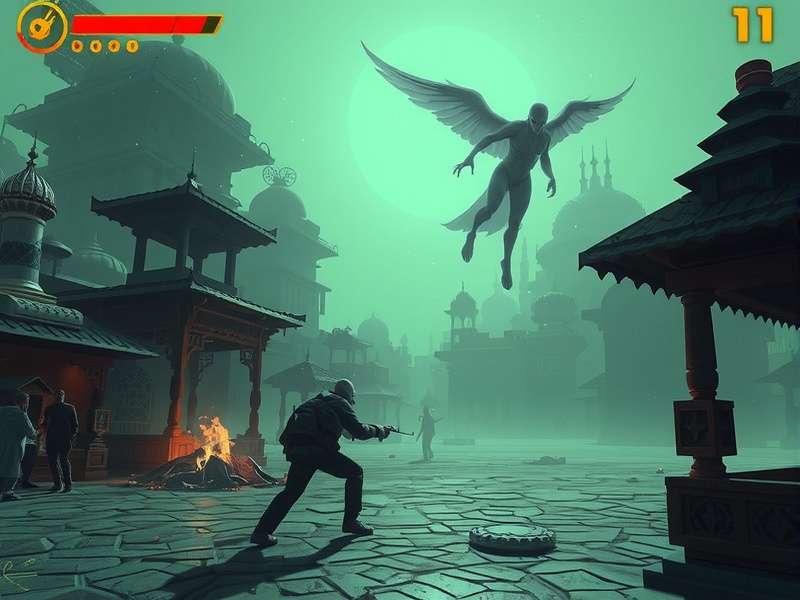
Figure 2: Exploring the dense, foggy paths of Sanjay Van, one of the most terrifying locations in Ethereal Habitat Delhi. The Spirit Detector (visible in the bottom right corner) helps players locate hidden spirits and artifacts.
Puzzle-Solving: Desi Rituals and Supernatural Challenges
Puzzle-solving is a core component of Ethereal Habitat Delhi, and the game’s puzzles are uniquely desi, drawing inspiration from Indian supernatural beliefs, rituals, and history. Unlike many horror games that rely on complex machinery or logical puzzles, Ethereal Habitat Delhi’s puzzles require players to use their knowledge of Indian culture and folklore to progress, making them both challenging and culturally resonant.
The game features three types of puzzles: Ritual Puzzles, Historical Puzzles, and Environmental Puzzles. Ritual Puzzles are the most common and involve performing specific Indian rituals to progress. For example, one puzzle requires players to arrange lemons and chillies in a specific pattern (a traditional method for warding off evil) and recite a hymn from the Vedas to break a churail’s curse. Another Ritual Puzzle tasks players with offering a coconut to a friendly spirit to gain access to a hidden room—coconuts are considered sacred in many Indian traditions and are often used in religious ceremonies to appease deities and spirits.
Historical Puzzles require players to use their knowledge of Delhi’s history to solve. For instance, a puzzle in the Red Fort asks players to arrange Mughal-era coins in the correct order based on the reigns of Mughal emperors, while a puzzle in the Khooni Darwaza requires players to answer questions about the 1857 Sepoy Mutiny to unlock a door. These puzzles not only add depth to the gameplay but also educate players about Delhi’s rich history, aligning with the game’s goal of blending entertainment with cultural learning.
Environmental Puzzles involve using the game’s environment to progress. For example, a puzzle in Sanjay Van requires players to use sunlight to reflect off a mirror and activate a hidden mechanism, while a puzzle in the Abandoned Delhi Metro Station involves manipulating train tracks to create a path through the station. These puzzles often require players to think creatively and use items they’ve collected during exploration, adding a strategic element to the gameplay.
The puzzles are designed to be challenging but not frustrating, with a gradual increase in difficulty as players progress through the game. To help players who get stuck, the game includes two hint systems: the “Ritual Guide” and the “Hint System.” The Ritual Guide provides contextual hints based on Indian folklore and traditions, while the Hint System offers step-by-step clues (with a 2-minute cooldown period to prevent overuse). The hints are designed to guide players without giving away the solution, encouraging them to use their own knowledge and creativity.
Another unique feature of the game’s puzzles is their dynamic nature—some puzzles change based on the time of day, weather conditions, or the player’s actions. For example, a puzzle that requires using sunlight to reflect off a mirror can only be solved during the day, while a puzzle that involves communicating with a spirit can only be solved at night. Additionally, some puzzles have multiple solutions, allowing players to approach them in different ways based on their playstyle. This dynamic nature adds replayability to the game, as players can revisit locations at different times to solve new puzzles and uncover hidden secrets.
Combat: Warding Off Evil with Desi Weapons and Rituals
Combat in Ethereal Habitat Delhi is designed to be tense and strategic, rather than action-packed. Unlike many horror games that feature guns or swords, the game’s combat revolves around using desi items and rituals to ward off evil spirits. The game’s spirits are based on Indian supernatural folklore, and each has its own strengths, weaknesses, and behaviors—requiring players to adapt their strategy accordingly.
Hostile spirits in the game include churails (female ghosts), bhoots (male ghosts), djinns (supernatural beings from Islamic folklore), pretas (hungry ghosts from Hindu mythology), and pishachas (cannibalistic spirits from Hindu mythology). Each spirit has a unique weakness: churails are weak to sindoor and hymns from the Vedas, bhoots are weak to camphor and holy water, djinns are weak to Quranic verses and salt, pretas are weak to food offerings (like laddoos and rotis) and prayers from the Bhagavad Gita, and pishachas are weak to turmeric and mantras from the Upanishads.
Players can carry a limited number of items (up to 10 at a time), so they must choose their inventory carefully based on the spirits they expect to encounter. For example, if a player is exploring a location known to be haunted by churails, they should carry extra sindoor and a copy of the Vedas, while exploring a location haunted by djinns requires salt and Quranic verses. Players can also craft items by combining collected resources—for example, combining lemons and chillies to create a “Protection Charm” that wards off low-level spirits.
The game also features “Ritual Combat,” where players must perform a specific ritual to defeat powerful spirits (bosses). For example, defeating the Churail of Khooni Darwaza requires players to arrange lemons and chillies in a specific pattern, recite a hymn from the Vedas, and sprinkle holy water on her—all while avoiding her attacks. Ritual Combat is tense and immersive, with dynamic sound effects and visual cues that build suspense. If a player fails to perform the ritual correctly, they must start over, adding a sense of urgency to the combat.
To enhance the tension of combat, the game includes a “Fear Meter” that increases when players are near a hostile spirit. If the Fear Meter fills up, Aarav becomes scared, reducing his movement speed and making it harder to perform rituals. To reduce the Fear Meter, players can use items like camphor or recite a hymn, adding another layer of strategy to the combat. Additionally, the game’s sound design plays a crucial role in combat—hostile spirits emit eerie sounds (like whispers, screams, and laughter) that grow louder as they approach, helping players anticipate attacks and react accordingly.
Unlike many horror games where combat is optional, combat in Ethereal Habitat Delhi is integral to progression, as some spirits block access to key areas or hold essential items. However, the game also offers alternative approaches to combat for players who prefer a more stealthy playstyle. For example, players can avoid hostile spirits by hiding in shadows or using distractions (like throwing a stone to lure a spirit away), allowing them to progress without engaging in combat.
Progression System: Spirit Essence and Heritage Cards
The game’s progression system is designed to reward exploration, puzzle-solving, and combat, with two main types of collectibles: Spirit Essence and Heritage Cards. Spirit Essence is the game’s primary currency, collected by interacting with spirits (friendly or hostile), solving puzzles, and completing quests. It can be used to upgrade Aarav’s abilities, craft items, and unlock new features.
Aarav’s abilities can be upgraded in five categories, each with three levels of improvement:
-
Spiritual Protection
Increases resistance to hostile spirits, reducing the rate at which the Fear Meter fills up. Level 1: 20% resistance. Level 2: 40% resistance. Level 3: 60% resistance. Upgrading this ability makes it easier to explore dangerous locations without becoming scared.
-
Night Vision
Improves Aarav’s ability to see in the dark. Level 1: 10-meter range, green tint. Level 2: 20-meter range, clearer vision. Level 3: 30-meter range, color vision. Upgrading this ability makes it easier to explore night-time locations and avoid hidden dangers.
-
Spirit Communication
Allows Aarav to communicate with friendly spirits more effectively. Level 1: Understand basic messages. Level 2: Understand complex messages and unlock side quests. Level 3: Receive special rewards from friendly spirits. Upgrading this ability lets players uncover hidden secrets and access exclusive content.
-
Stamina Boost
Increases Aarav’s stamina, allowing him to run faster and longer. Level 1: 20% stamina increase. Level 2: 40% stamina increase. Level 3: 60% stamina increase. This ability is crucial for escaping hostile spirits and exploring large locations quickly.
-
Puzzle Mastery
Reduces the cooldown time of the Hint System and provides more detailed hints. Level 1: 90-second cooldown, basic hints. Level 2: 60-second cooldown, detailed hints. Level 3: 30-second cooldown, contextual hints. Upgrading this ability makes it easier to solve complex puzzles.
Heritage Cards are another key collectible, unlocked by exploring each location and collecting historical artifacts. Each card provides detailed information about the location’s history, architecture, and local legends. For example, the Red Fort Heritage Card explains the fort’s construction by Shah Jahan in the 17th century, its role in the Mughal Empire, and the tragic events that led to its haunted reputation. The Khooni Darwaza Heritage Card details the gate’s history during the 1857 Sepoy Mutiny and the stories of the soldiers who lost their lives there.
Collecting all Heritage Cards for a location unlocks a special “Heritage Quest” that provides additional backstory and rewards. For example, collecting all Heritage Cards for the Red Fort unlocks a quest where players must find a hidden manuscript written by Aarav’s grandfather, which reveals the true origin of the curse. Heritage Quests are more challenging than regular quests but offer valuable rewards like rare items, large amounts of Spirit Essence, and exclusive outfits for Aarav.
The game also features a “Completionist” system that rewards players for 100% completing each location. Completing a location 100% requires solving all puzzles, collecting all items, uncovering all hidden secrets, and completing all side quests. In return, players unlock exclusive rewards like new desi outfits for Aarav (such as a traditional kurta-pajama with a Mughal design or a modern jacket with Delhi-themed embroidery), powerful items (like a “Divine Coconut” that can appease any friendly spirit), and access to bonus content (like behind-the-scenes footage of the game’s development).
| Gameplay Element | Desi Twist | Player Benefit |
|---|---|---|
| Exploration | Locations based on real haunted sites in Delhi (Red Fort, Purana Qila, Chandni Chowk) | Experience authentic desi horror while learning about Delhi’s history |